Radicals
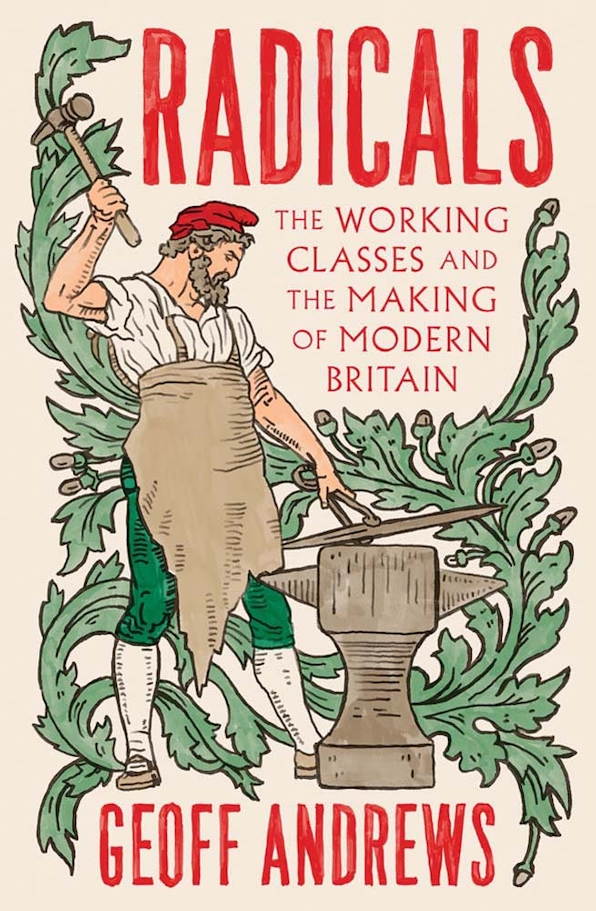
Radicals – Yale University Press London
An authoritative and original history of the working classes and the British Left
The political Left in Britain rose out of the Industrial Revolution, as the working classes emerged as the leading force in the call for social change. Their contributions extended widely to political representation, the birth of the Labour Party and women’s suffrage, the autodidact tradition in adult education, and Britain’s literary culture. Throughout subsequent decades, the working classes remained central to the British radical tradition.
Geoff Andrews traces the history of the Left and the Labour Party through the ideas of leading thinkers, writers, educationalists, trade unionists, and politicians. Ranging from the Workers Educational Association to the General Strike and the Women’s Liberation Movement, Andrews uncovers the voices of key figures. The first account of the Labour Party to put the working classes at the heart of its history, this fascinating book tells a wider story of their progressive contribution to British culture, politics, and the movements which have driven social change.
The Shadow Man
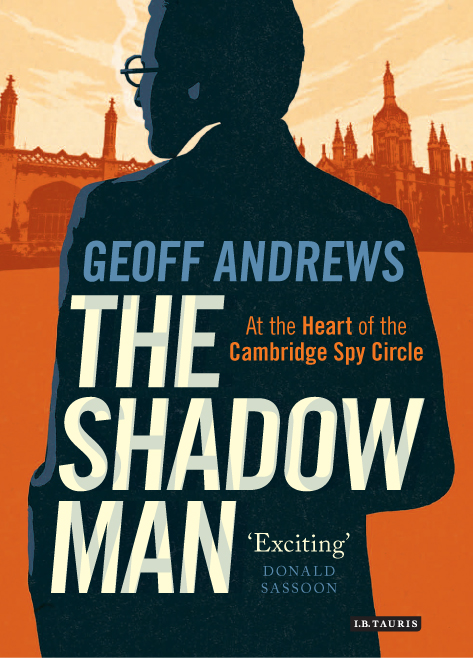
The Shadow Man: At the Heart of the Cambridge Spy Circle: Geoff Andrews: I.B. Tauris – Bloomsbury
James Klugmann appears as a shadowy figure in the legendary history of the Cambridge spies. As both mentor and friend to Donald Maclean, Guy Burgess and others, Klugmann was the man who manipulated promising recruits deemed ripe for conversion to the communist cause. This perception of him was reinforced following the release of his MI5 file and the disclosure of Soviet intelligence files in Moscow, which revealed he played a key part in the recruitment of John Cairncross, the ‘fifth man’, and had a pivotal war-time role in the Special Operations Executive, helping shift Churchill and the allies to support Tito and the communist partisans in Yugoslavia. In this book, Geoff Andrews reveals Klugmann’s story in full for the first time, uncovering the motivations, conflicts and illusions of those drawn into the world of communism – and the sacrifices they made on its behalf.
Agent Molière
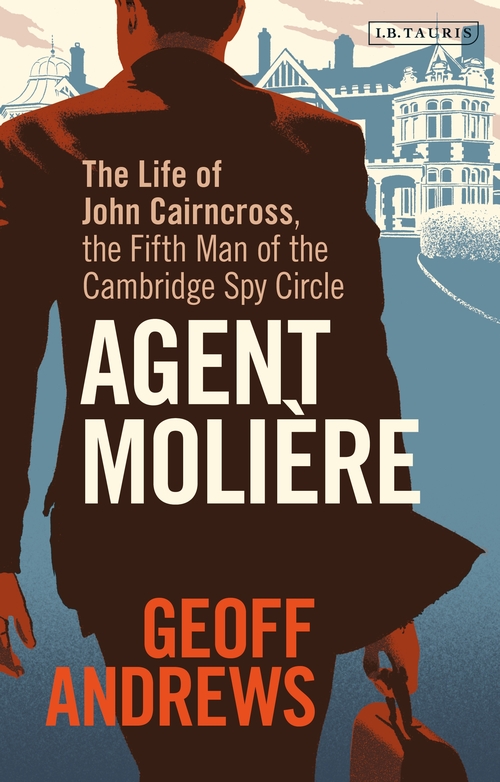
The Cambridge Spies continue to fascinate – but one of them, John Cairncross, has always been more of an enigma than the others. He worked alone and was driven by his hostility to Fascism rather than to the promotion of Communism. During his war-time work at Bletchley Park, he passed documents to the Soviets which went on to influence the Battle of Kursk. Geoff Andrews gained exclusive access to the Cairncross papers and secrets, and has spoken to friends, relatives and former colleagues. In his portrait, a complex individual emerges – a scholar as well as a spy – whose motivations have often been misunderstood. After his resignation from the Civil Service, Cairncross moved to Italy and there he rebuilt his life as a foreign correspondent, editor and university professor. This gave him new circles and friendships – which included the writer Graham Greene – while he always lived with the fear that his earlier espionage would come to light.
The full account of Cairncross’s spying, his confession and his dramatic public exposure as the ‘fifth man’ is told here for the first time, unveiling the story of his post-espionage life.
You can find details of all Geoff’s books here. Geoff Andrews books and biography | Waterstones